
Welcome to Optimism

progress and the unreasonable man – thoughts on Steve Jobs
Photo(4)

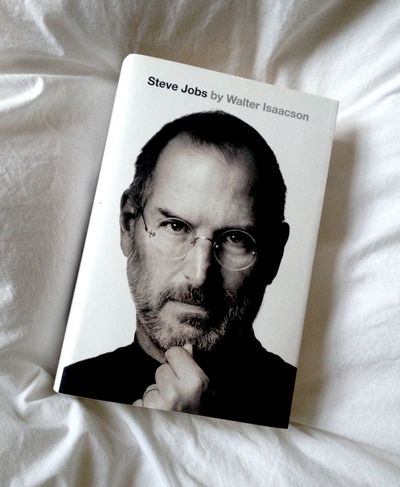
I finally read the biography of Steve Jobs by Walter Isaacson. It's a heavy tome (I'm sure Jobs would have specified a slimmer design), too big to carry about, and I generally read when I'm travelling, so it wasn't until I downloaded an electronic copy that I got stuck into it. I can recommend it for anyone who's interested in business, tech, the creative industries or Jobs himself.

Jobs comes across as an obnoxious, perfectionist weirdo who managed, in his own words, to 'put a dent in the universe', seemingly by sheer force of will. He was an unusual combination of hippy drop-out, inspired creative thinker and business mogul, with an obsessive compulsion for everything around him to be 'just right'. A revealing incident in the book relates how he was under sedation while being treated for cancer and the doctors tried to put a mask over his face.

Jobs ripped it off and mumbled that he hated the
design and refused to wear it. Though barely able to speak, he ordered
them to bring five different options for the mask and he would pick a
design he liked. . . . He also hated the oxygen monitor they put on his
finger. He told them it was ugly and too complex.

Yeah, I've worked with some designers like that.

Jobs's perfectionism and need for total control led him to create a completely self-contained system in which software and hardware were integrated and even the retail channel was owned by the brand. He specified everything from packaging to the colour of the walls in the factory and even deliberately had the products engineered so they couldn't be opened without specialist tools, to prevent people from so much as changing a battery. Once perfection had been achieved he didn't want anyone to tamper with it. When working on the specifications for Apple's new HQ, the architects wanted the windows to open, but Jobs rejected this. He “had never
liked the idea of people being able to open things. ‘That would just
allow people to screw things up.’ ”

At times in the book he appears to be a visionary genius who can anticipate what people want before they know themselves, transform whole industries in a matter of months and push his people to perform seeming miracles of engineering in products that astonish and delight the world. And at times he's a self-centred pain in the arse, who will simply ignore the facts if they don't suit him. He abuses, cheats and lies to those around him, apparently with no remorse.

The book touches on Jobs's approach to advertising and branding at a number of points.

It relates that in briefing Chiat/Day for the launch of the Macintosh, he demanded something as revolutionary as he believed the product itself to be. "I want something that will stop people in their tracks," He said. "I want a thunderclap."

A thunderclap is what he got.

Here's Jobs previewing the ad to the Apple sales force at an internal event in 2003.

The salesforce get it. But when he showed '1984' to the board of Apple, "Many of them thought it was the worst commercial they had ever seen." The board tried to pull the campaign but Lee Clow claims that Chiat/Day lied and told them they couldn't sell the 60s Superbowl slot. (That's such a great story that I really hope it's true.) The screening caused a sensation and '1984' has been described as the greatest TV ad of all time.

The concept (1984) captured the zeitgeist of the personal
computer revolution. Many young people, especially those in the
counterculture, had viewed computers as instruments that could be used
by Orwellian governments and giant corporations to sap individuality…
The ad cast Macintosh as a warrior for (personal empowerment) – a cool,
rebellious and heroic company that was the only thing standing in the
way of the big evil corporation's plan for world domination and total
mind control. Jobs liked that. He fancied himself as a rebel and he
liked to associate himself with the values of the ragtag band of hackers
and pirates he recruited to the Macintosh group.
..The ad was a way of reaffirming, to himself and to the world, his desired self image.

If Jobs identified himself with the message in '1984' then 'Here's to the crazy ones' must have seemed like a personal manifesto.

Here’s to the crazy ones. The misfits. The rebels. The troublemakers.
The round pegs in the square holes. The ones who see things differently.
They’re not fond of rules. And they have no respect for the status quo.
You can quote them, disagree with them, glorify or vilify them. But the
only thing you can’t do is ignore them. Because they change things.
They push the human race forward. While some may see them as the crazy
ones, we see genius. Because the people who are crazy enough to think
they can change the world, are the ones who do.

You get the sense that this is exactly how Jobs saw himself – a rebellious genius who pushed the human race forward, despite the carping of critics. People talk of Jobs's 'reality distortion field'; when
reality didn't suit him he ignored it, or sought to overturn it, or persuaded others that they could do so.

Here's Jobs in 1997, presenting 'Here's to the Crazy Ones' in another Apple keynote speech, when he had returned to the company as interim CEO. At this point Apple sales had slumped, their product line-up was weak and they had yet to launch the iMac or iPod. He needed to remind Apple fans and employees what Apple stood for, at its core and how they were going to return to those values. It's interesting to hear one of the world's great marketers speak about branding and marketing in such clear, simple terms.

 The book goes on:

Starting with the 'Think Different' campaign and continuing through the rest of his years at Apple, Jobs held a freewheeling three-hour meeting every Wednesday afternoon with his top agency, marketing and communications people to kick around messaging strategy. "There's not a CEO on the planet who deals with marketing the way Steve does," said Clow. "Every Wednesday he approves each new commercial, print ad and billboard." At the end of the meeting he would often take Clow and his two agency colleagues Duncan Miller and James Vincent, to Apple's closely guarded design studio to see what products were in the works. "He gets very passionate and emotional when he shows us what's in development," said Vincent. By sharing with his marketing gurus his passion for the products as they were being created, he was able to ensure that almost every ad they produced was infused with his emotion."

Jobs was responsible for some amazing work, but he was a demanding client. He responded to the first draft of 'The Crazy Ones' with the words, "It's advertising agency shit and I hate it!' He told copywriter James Vincent that he hated the iPad launch work.

"Your commercials suck," he said. "The iPad is revolutionizing the world and we need something big. You've given me small shit."
“Well, what do you want?” Vincent shot back. “You’ve not been able to tell me what you want.”

“I don’t know,” Jobs said. “You have to bring me something new. Nothing you’ve shown me is even close.”

Vincent argued back and suddenly Jobs went ballistic. “He just started
screaming at me,” Vincent recalled. Vincent could be volatile himself,
and the volleys escalated.


When Vincent shouted, “You’ve got to tell me what you want,” Jobs shot
back, “You’ve got to show me some stuff, and I’ll know it when I see
it.”

The book explains how the agency presents twelve different campaigns, from inspirational and stirring to humorous, to celebrity endorsement. Further campaigns are developed and produced, but Steve still isn't happy. 

He had been asking for ads that were different and new but eventually he realised he did not want to stray from what he considered the Apple voice. For him that voice had a distinctive set of qualities: simple, declarative, clean…And so they went back to a clean white background, with just a close-up showing off all the things that "iPad is" and could do.
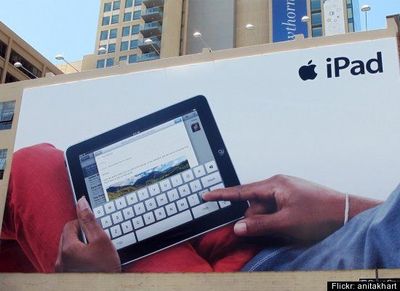

IPad ad

Not so much the creative visionary, more the client who doesn't know what he wants until he sees it and makes you do a ton of work before he decides he liked the first thing best.

Despite all this, I have to say I would have jumped at the chance to work with the obsessive, perfectionist weirdo that was Steve Jobs.


In the words of George Bernard Shaw, "The reasonable man adapts himself to the world; the unreasonable one
persists in trying to adapt the world to himself. Therefore all progress
depends on the unreasonable man.' Jobs was clearly unreasonable: he succeeded in adapting the world around him to fit himself. He couldn't have achieved so much without being unreasonable; the interesting question is whether he could have done it without being so unpleasant.

I've heard people in this business say we should "tolerate genius". (I think David Ogilvy said it first.) I've also heard Dan Wieden say, "Life's too short to work with assholes." There are few geniuses in advertising, no Lennons or Picassos or Dylans, but there are plenty of assholes. I've been lucky enough to work with some exceptional talents who are unreasonable enough to achieve greatness in our field, without being unpleasant in the process. Wieden is one of the few. Those people are never easy to work with, but they are crazy enough to believe they can make a difference. And the ones who are crazy enough to believe that are the ones who do.

W+K @ SXSWi part three: “The Good, The Bad & The Barley” – Interactive’s View

Screen Shot 2013-03-21 at 22.41.52

Terrible picture, great talk: Rushkoff was a real highlight

Graeme
Douglas, Head of Interactive & Innovation, and Luke Tipping, Senior
Interactive Creative, write:

The genius of SXSW is its innate ability to
shrug off any criticism of it with a quick ‘well, you chose the talks, son –
deal with it’. And with seemingly thousands on offer (maybe it was hundreds,
but you get the point) half the battle in Austin is navigating the different
points-of-view on offer and working out what’s going to be genuinely
useful/different/provocative versus less interesting than a non-BBQ
based meal. The titles can give you a little guidance but even the finest headlines can often mask some pretty lame content. (‘What Can We Learn
From The Unabomber’ was predictably good whereas ‘It’s Reddit’s Web, We Just
Live In It’ was disappointingly banal and one-sided). The seemingly arbitrary
‘difficulty’ scale the organizers attach to each piece of content is equally
useless (we all want the difficult stuff, right?).

The only guidance we can
proffer for future visitors is:

– Avoid talks by agencies (aside from W+K,
ahem). Chances are you’ll know more

– Avoid anything purporting to have the
definitive answer to something, especially if delivered list format (‘ten ways
to create a viral!’)

– Avoid anything with advertising in its
title (more on that in a bit)

– Go see the big hitters (like Douglas Rushkoff who was there to talk about 'Present Shock', his new book, the thrust of which is "that we no longer have a sense of a future, of goals, of direction at all. We have a completely new relationship to time; we live in an always-on “now,” where the priorities of this moment seem to be everything" – well worth a read). These guys – the rock stars – are invariably better prepared, and invest more inwhat they present. It's not a bulletproof strategy, but it's a decent bet.

– Go weird (like Tony D says): the more
esoteric, oblique and, frankly, random, the better

Perhaps as valuable as the scheduled panels
(or, arguably, more so) are the conversations and connections around the edges;
the people you meet randomly at an informal hackathon, the chats that happen
over a weak American beer as you compete to spot the try-hard Barleys rocking Google
Glass*. Hackney Council, with Tech City – yeah, Old Street roundabout – put up a
good show (ably assisted our chums at Mother London) with Hackney House, a
pop-up showcase of some of the interesting things, ideas and people currently
bubbling up from that digital enclave in East London. OneDotZero, MakieLab, BERG, and the
inimitable Daniel Hirschmann were amongst some of the speakers dropping a bit
of Shoreditch on Austin.

Screen Shot 2013-03-21 at 22.38.11

Just an honest adman, wearing a prototype set of arduino-powered hackable sunglasses at Hackney House.

The other issue, and we're acutely aware of the irony in even raising this, is the rise of the admen in Austin. They're (we're?) everywhere. A few years ago, our presence was limited to those that had a specific interest in emerging tech and its implications. Not now. Everyone tips up for what is in danger of becoming Cannes, TX. The reason is probably straightforward: tech and emerging platforms are now everyone's issue, not just half a dozen geeks in the corner. We've popped over the tipping point in the last couple of years where everyone involved in the brand communication game actually does give a shit about this stuff, or at least recognises the importance of it.

What happens from here on in is anyone's guess; but what is certain is SXSW need to do something to manage the tide – they're not going to be able to stem the march of Madison Avenue and Soho (nor would they want to, given the $ that it brings with it), but it can't be at the expense of what makes Austin special, interesting and weird. This can't become an 'advertising' conference. As soon as that happens, it's dead. Plus, France already does one Mad Men conference very well (at least, depending on your point of view).

Ultimately SXSW is what you make it; choice
paralysis is your biggest enemy, an ability to read the room, and confidently
stroll out of a lame panel within the first five minutes is your greatest ally. The challenge is to ensure you’re in
credit when it comes to balancing the good vs. bad panels when you reflect on
the event en route home. Sprinkle that with a handful of interesting conversations with new people you'd like to work with, and you're not far off something really worthwhile.

And I think we just about achieved that.

///

But what of the chat? Whilst the diversity
and breadth of the event means it’s hard to properly pin it down, there was one
theme evident that was pretty hard to avoid.

SXSW 2013 was the year of hardware. A shift
to the real world. Where hype about software was matched with Vines, instagrams
and hashtags about uniquely interactive physical objects.

Nope. Software hasn’t gone away. It’s just
left it’s glass slab home in favour of eating into other objects. Objects more
natural and useful because their apps are invisible and embedded.

What’s driving the shift from bits to
atoms? Education. Yep the mobile phone is bright and hyper connected but today
the objects it connects to are still quite dumb. The next chapter in the
Internet Of Things an is increase in the intelligence of the objects that
mobile phones connect to.

Medication caps that text you if you forget
to take your pills. A fork that sets your alarm off when you eat too fast.
David Rose at MIT called these ‘enchanted objects’. This year we’ll all be
asking how we can embed sensors like GPS, accelerometers, RFID, image capture or
the Social Graph into our products to magic them an IQ boost. 

As well as objects Chris Risdon of Adaptive
Path reminded us that sensors can be used to create more personlised interactions
with people in service design too. ‘Handy’ said Steve Yankovich, eBay’s Head Of
Technology, because ‘if we know that a high value customer is in the shop then
we want to give them a bigger hug.’ Lookout soon for geofenced storefronts that
recognise you through your digital wallet.

Other hardware highlights this year
included 3D printer scanners, gesture control, OUYA, intrinsic wearable
technologies and the aforementioned Barley accoutrement du jour, Google Glass.

Bre Pettis, CEO of 3D printing company
MakerBot showcased the MakerBot Digitizer. Which he believes will help his
company shift from being a producer of 3D printers to being at the heart of a
digital reproduction ecosystem. Scanning means no longer will we have to be a
CAD design pro to print in 3D. Using our smartphone we just need to scan the
object we want to reproduce (steal). Remember what happened when somebody made
it easy to copy songs in the music industry? Ahoy there Printer Pirates.

Leapmotion was the most tweeted about
start-up at SXSW. A small, $79 USB device launching in May allows people to
control their computers using hand gestures in mid air. It’s able to sense
individual finger movements for fine manipulation of objects and apps on screen.
As a piece of hardware Leapmotion’s role in the world is to get rid of software
altogether. Today software layers present us with a series of complex elements
and choices for how to navigate a digital environment. This is driven by the
need to interact with a mouse, trackpad, keyboard, or glass panel. Leapmotion flips the bird to that. As Golden Krishna at Samsung said ‘the best interface
is no interface’.

Julie Uhrman, CEO of open-source gaming
platform OUYA, discussed how her hardware console would 'open up the world of
TV gaming'. ‘All great games deserve the TV screen’ she said. Which is why she
built OUYA to be open-source. To attract some of the most innovative and
popular gaming developers who have been designing for tablet and mobile more
recently. Super Hexagon on my 32”? Yes please.

Ouya_Console

Olivier Bau from Disney Labs was a
highlight at the festival. He demonstrated the next era of wearable
technologies. No not hardware that you wear on your skin but hardware that you
wear underneath it. Taking inspiration from comic books his philosophy is that
‘the best superpowers are invisible’. That’s why he’s created a wearable device
that interrupts the body’s electrical current with different frequencies to
create a wide-ranging set of movement. Frequencies that guide your fingers to
play Stairway To Heaven on the guitar for example.

Ray Kurzweil is coming for
you, Mr. Page.

Then on the penultimate day Timothy Jordan
of Google took to the stage to demonstrate the most worrying technology I’ve seen
since the invention of social media; Google Glass. He says that ‘by bringing
technology closer it weirdly gets out of the way’. I say ‘LolKatz in my eyes
ain’t out of the way mate’. For every layer of overlaid we become more distant
from the underlaid. ‘Google Glass please remove that homeless person from my sight’,
‘Google Glass please make that river look more clean’. No. I don’t want to see
the problems of the real world and other eco systems brushed under the
augmented Google carpet. They need to be seen with our own two eyes.

Thankfully the final talk at SXSW was about
seeing beyond the banjo-laden launch video from time to time. As the SXSWi verteran and all-round legend Bruce Sterling
so brilliantly put it ‘every deployment of technology isn’t necessarily an
advance. Remember that technology does not always make it better. There are
still people sleeping in a cardboard box in Silicon Valley’.

What’s all this  got to do with hardware? Well our hunch is
that hardware’s hard. Harder than software. There’s more to an atom than a
drag, a swipe and a pinch. You can smell it, lick it and trip over it. Atoms
are expensive and constrained compared to bits. They require energy and more
atoms to be arranged and duplicated. Which means the risk is higher. Not just
to the bottom line but to the betterment of humanity too.

So as Tony D said, before we start
building, making and printing things, before the Wow Factor, let’s ask
ourselves, where’s the betterment? 

@graemedouglas / @luketipping

Screen Shot 2013-03-21 at 22.45.05

BBQ, well nice.


*Glass will be amazing, we're sure.

Loading